


Baroque Furniture Sweden: Gilded Elegance for Nordic Interiors
Baroque furniture and Swedish interiors are usually described as opposites. One is carved, gilded and theatrical, the other pale, quiet and functional. In practice they belong together more closely than almost any other pairing in Europe, and the reason is historical rather than a matter of taste: the Swedish Gustavian style, the look most people mean when they say Scandinavian classic, is a lightened, restrained descendant of French late baroque and rococo. The proportions are the same. Only the volume was turned down.
Casa Padrino supplies luxury furniture in the baroque style across Europe, and Sweden has become one of the markets where it works best. A carved and gilded mirror against a chalk white Swedish wall does not look foreign. It looks like the ancestor of the room. This page explains how to use baroque furniture in a Swedish home without it tipping into pastiche, what the collection contains, and how delivery to Sweden works.
If you would rather read about the same range in Swedish, we have a Swedish language page at casa-padrino.de/sverige/barockmobler. The English pages here are the ones connected to the webshop checkout.
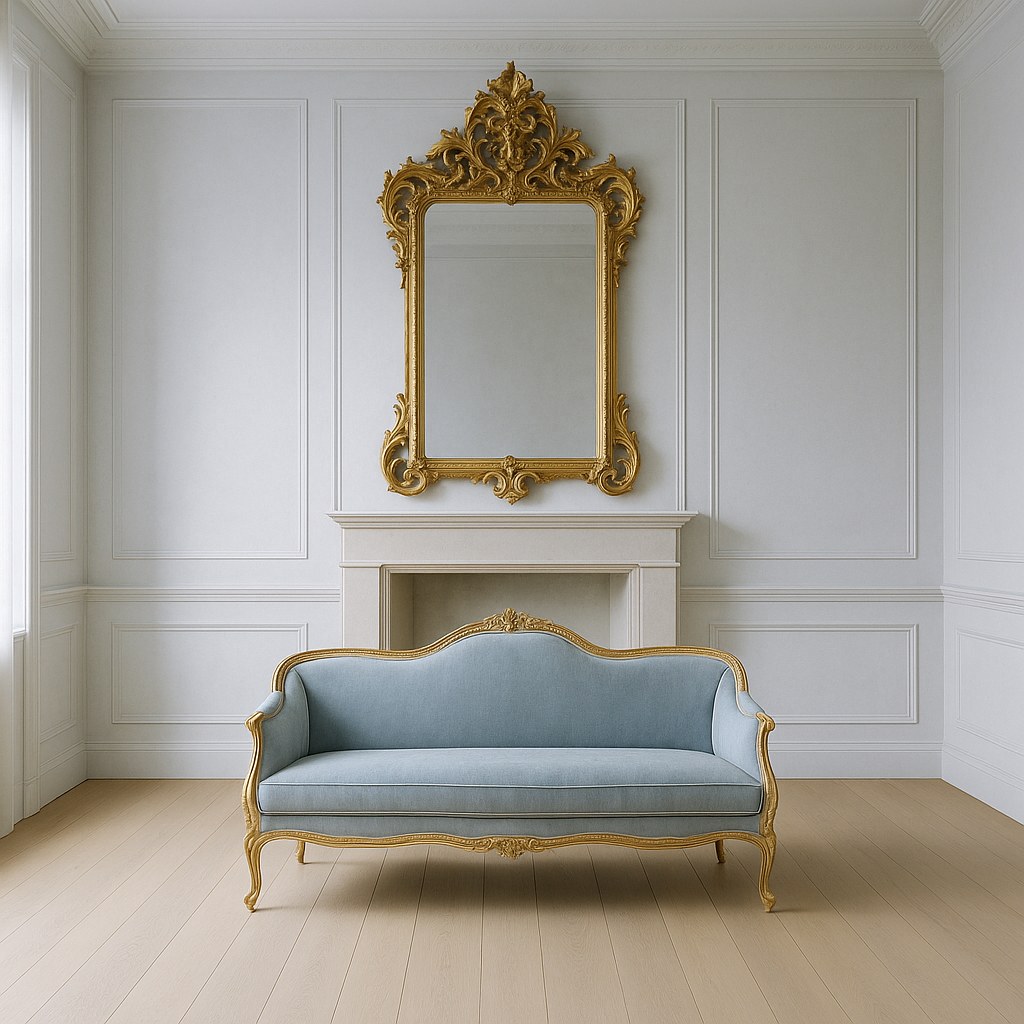
The Gustavian connection, and why it matters
When Gustav III returned from Versailles in the 1770s he brought back a formal language that Swedish craftsmen then adapted to local materials and a colder climate. Carving was simplified, gilding was often replaced by pale paint, silk gave way to linen and cotton check. What survived unchanged was the underlying structure: symmetry, curved legs, high backed seating, the console and mirror pair, the chandelier as the centre of the room.
That is why a full baroque piece does not fight a Swedish room. Put a carved and gilded console beneath a mirror in a Gustavian hallway and the eye reads it as the richer original of something it already knows. The mistake is not to use baroque furniture in Sweden. The mistake is to use too much of it, and to strip out the pale walls and bare floors that give it something to stand against.
The practical rule most of our Swedish customers arrive at on their own: keep the shell Nordic and let one or two pieces be fully baroque. A white room, a pale floor, and then a gilded mirror over the fireplace, or a single throne armchair by the window, or a chandelier over a plain oak dining table. That combination photographs well because it is genuinely good design, not because it is a compromise.
Baroque furniture for the Swedish living room
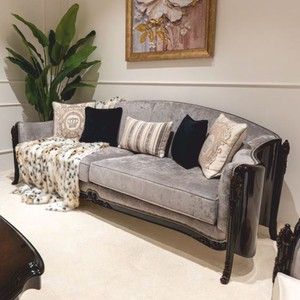
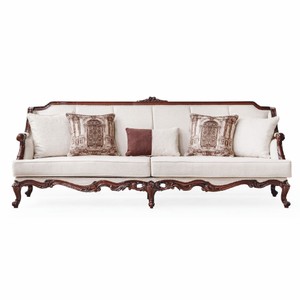
The living room takes the largest pieces. A baroque sofa with a carved frame and velvet upholstery gives a room a clear centre, and paired symmetrically with two baroque armchairs in the same wood finish it produces the calm, formal arrangement the style was designed for.
Swedish living rooms in period buildings frequently have a tiled stove in one corner, which fixes the seating arrangement whether you like it or not. That is usually an advantage. The stove gives the room an axis, and a baroque seating group set square to it reads as intentional rather than as furniture pushed against walls.
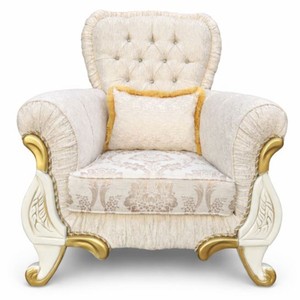
For rooms that cannot take a full group, a single strong piece does the work. Our throne armchairs with high crowned backs are among the most popular individual items in Sweden, in private libraries and in hotel suites alike. A baroque cabinet in dark wood with gilded mounts against a pale wall achieves something similar with less floor area.
The dining room
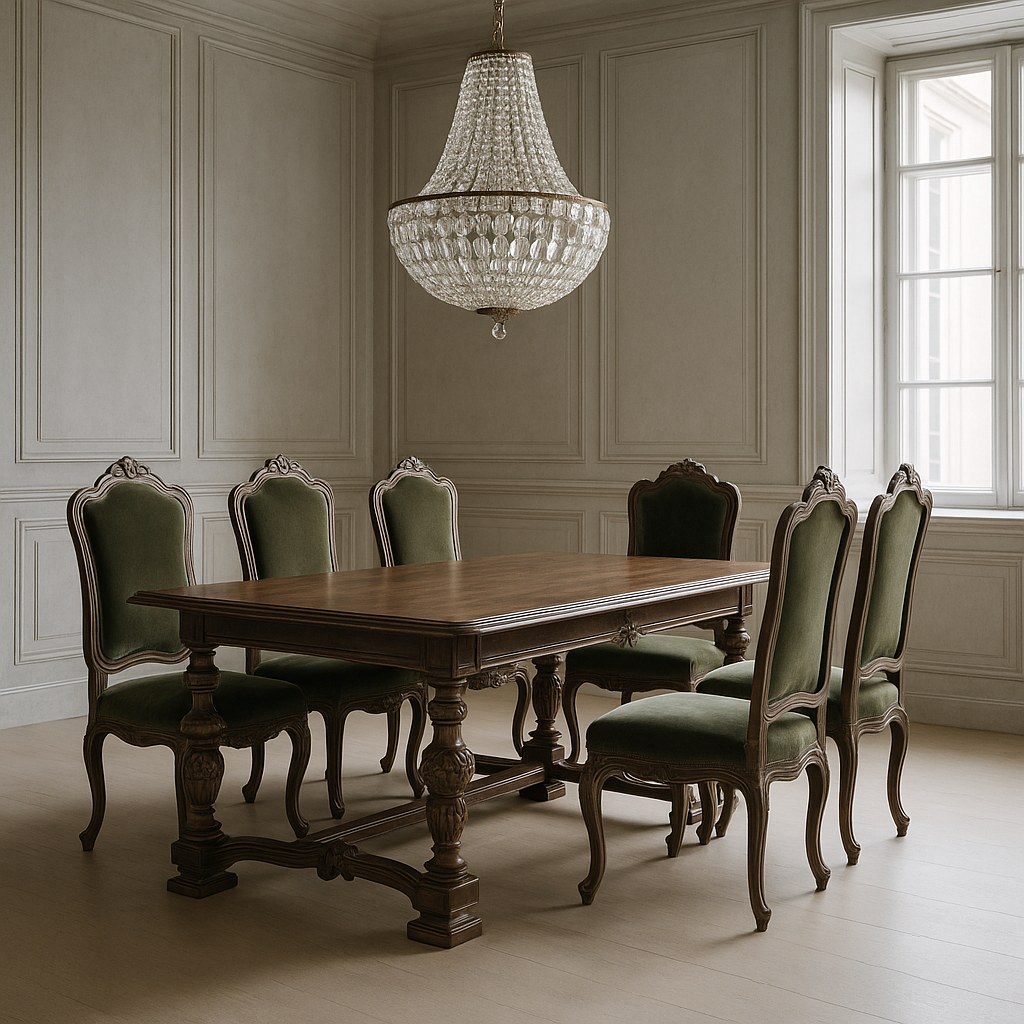
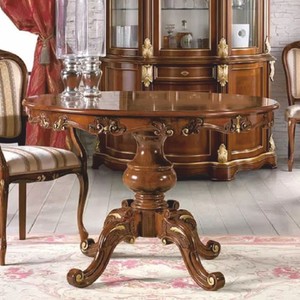
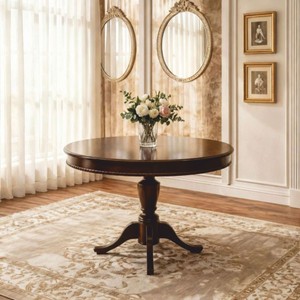
No room gains more from baroque furniture than the dining room, and no room in Sweden is used more formally. A baroque dining table in solid wood with a carved edge and heavy legs sets a frame for a meal that few modern tables can match, and it is one of the few pieces of furniture that genuinely improves with thirty years of use.
Around it stand baroque chairs with high backs, upholstered in velvet, brocade or leather. For a Swedish household that eats at the table daily rather than only at Christmas, leather is the sensible choice and looks no less correct.
Above the table hangs the piece that does most of the work in a dark country: a crystal chandelier. In candlelight, or on a dimmer set low, cut crystal produces a quality of light that no modern fitting reproduces, and in a Swedish winter that is not decoration, it is the reason the room is usable in the evening. Our Swedish language page on crystal chandeliers goes into sizing in more detail.
The pieces most often ordered together for a Swedish dining room are these:
- Carved dining tables in solid mahogany, oak or walnut, with or without a marble top
- High backed baroque chairs and carver chairs, in velvet, brocade or leather
- Sideboards, serving tables and glass fronted display cabinets
- Crystal chandeliers, candelabra and wall sconces
- Console tables and large wall mirrors for the end walls
Bedrooms, hallways and mirrors
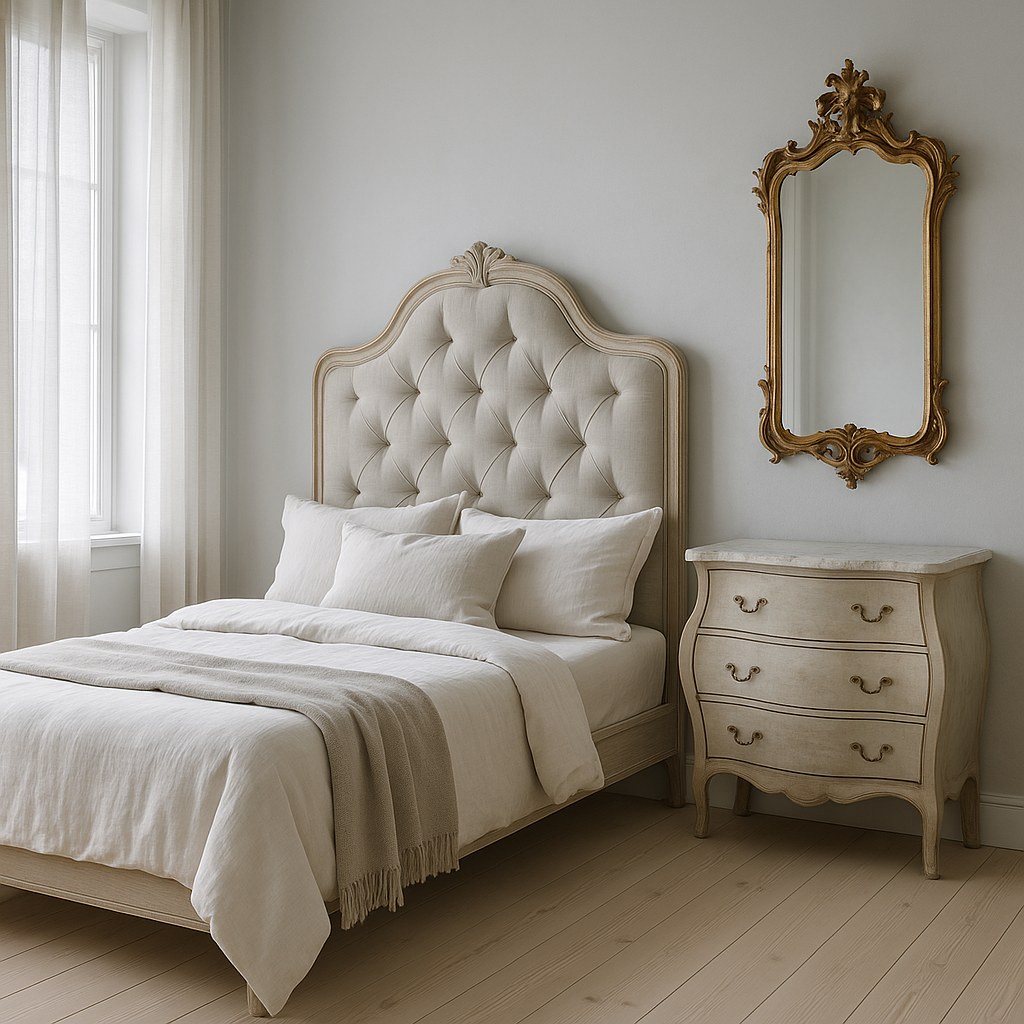
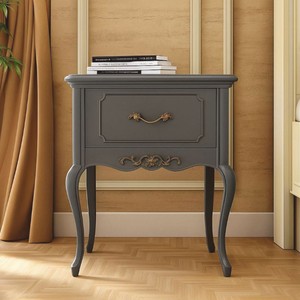
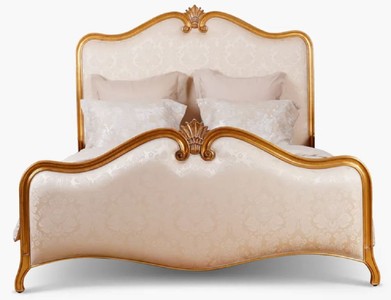
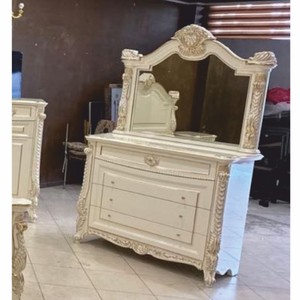
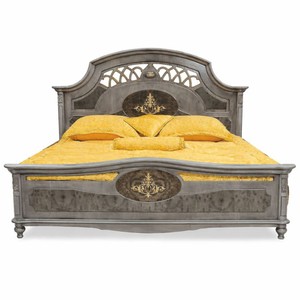
In the bedroom the style softens. A baroque bed with a tall upholstered or carved headboard turns a plain Swedish bedroom into something closer to a hotel suite, and a four poster with drapes does the same in a room with the ceiling height to carry it. Beside it, baroque chests of drawers with curved fronts and marble tops are among the most versatile pieces in the whole collection: they work equally well in the hallway or the living room, and a single gilded chest against a dark painted wall is one of the surest ways to give a Swedish room character.
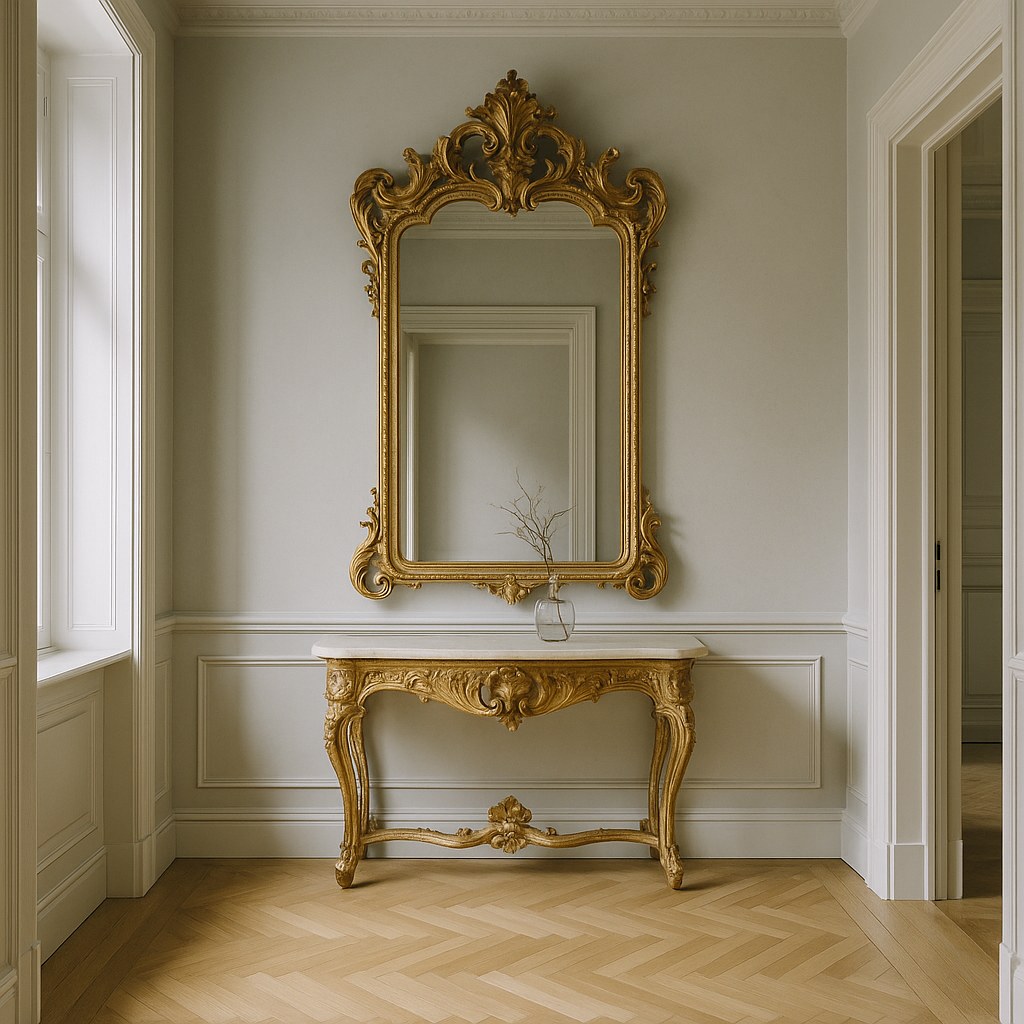
The hallway deserves particular attention in Sweden, because it is where visitors take off their shoes and stand for a minute, and because it is usually the darkest room in the apartment. A console table with a baroque mirror above it solves both problems at once. The mirror throws what light there is back down the corridor, and the pairing is the oldest arrangement in the style.
Mirrors deserve a paragraph of their own. Baroque architects used them deliberately to multiply candlelight, and the same logic applies in a Swedish flat in January. A large mirror hung opposite a window rather than on a blank wall measurably brightens a room. The full range of sizes, from overmantel to full length standing mirrors, is in the mirrors category, and the Swedish language overview is at barockspeglar.
Craft, materials and what handmade actually means
A carved baroque piece passes through several pairs of hands. The frame is cut from solid wood, the ornament is carved rather than pressed, the surface is sealed and grounded, gold leaf is laid by hand over a coloured bole, and only then is the piece upholstered. The consequence is that two examples of one model differ slightly in the depth of the gilding and the run of the grain. That is the signature of the method.
Woods are solid mahogany, oak, beech, birch and walnut. Upholstery is velvet, chenille, brocade, linen blends and leather. Marble tops are natural stone with natural veining. Mounts and fittings are brass and bronze. Nothing here is veneered chipboard, which matters more in Sweden than in southern Europe because Swedish interiors are dry for six months of the year and dry air is what opens a badly made joint.
None of it is antique, and we say so plainly. Every piece is newly built in the historical style. For a buyer that is usually the better deal: the sizes suit real rooms, the upholstery is new, the wood is dried for centrally heated interiors, and if you want a second matching chair in two years you can order one.
Delivery, VAT and the practical side
Sweden is in the European Union, so there is no customs clearance, no import duty and no import VAT. Large pieces travel by forwarding agent from Germany, by road via Denmark and the Öresund bridge to a Swedish terminal, and from there to the delivery address. The forwarder calls ahead to agree a slot.
Delivery is to the kerb. The driver unloads at the edge of the property and does not carry pieces upstairs. In Swedish buildings from around 1900, stair landings turn tightly and lifts are small or absent, so the route matters as much as the room. Before ordering anything over two metres, measure the narrowest door, the landing at the turn of the stairs and the lift car. Ask us if you are unsure; that conversation is much cheaper than a return.
Smaller pieces, mirrors, lamps and accessories go by parcel service and arrive within about a week. Freight for large items is shown per piece before you order, and it is driven by size and weight rather than by value.
Hotels, restaurants and public rooms in Sweden
Baroque furniture has an obvious commercial use in Sweden: it is instantly photographable, and a hotel or restaurant that wants a room guests remember gets more from one gilded wall of mirrors than from any amount of considered neutrality. We supply Swedish hotels, restaurants, spas and event venues from the same collection, with contract grade upholstery where it is needed and repeat availability on the models that a project has to be able to extend later.
The Swedish language pages on hotel furniture and restaurant interiors cover this in more detail, and the English hotel furniture and decoration category shows what is in stock.
Frequently asked questions about baroque furniture in Sweden
Does baroque furniture suit a Swedish home, or will it look out of place?
It suits Swedish homes unusually well, because the Gustavian style that shaped Swedish interiors is itself derived from French late baroque. The proportions are related. The one thing to avoid is filling a whole room. Keep the walls and floors pale and Nordic, then let one or two pieces be fully baroque, and the result looks deliberate rather than costumed.
Is the furniture antique or newly made?
Newly made, always, in the historical style and largely by hand. We never describe a piece as antique. The practical advantages are real: modern dimensions, new upholstery, wood dried for centrally heated homes, and the ability to order a matching piece years later.
Do I pay customs or import VAT when ordering to Sweden?
No. Sweden is in the EU and the goods ship from within the EU, so there is no customs clearance, no duty and no import VAT to settle on arrival.
How long does delivery to Sweden take?
Parcel sized items usually arrive within about a week. Large furniture goes by forwarding agent and typically takes two to four weeks for stocked pieces, because the shipment is consolidated onto a Scandinavian route. Made to order pieces take longer and the lead time is stated on the product page.
Will the delivery driver bring it into my flat?
No, delivery is to the kerb. Arrange two people and check the route: narrowest door, the turn of the stairs, and the lift. This is the single most common practical problem with orders from older Swedish apartment buildings.
Can I choose the fabric and the wood finish?
For a large part of the upholstered range, yes. Send us the model number and what you want and you will get a firm price and lead time before production starts. Wood finishes and, in some cases, dimensions can also be adapted.
Is gilded furniture hard to look after?
No, but it does not like water. Dust gold leaf with a soft dry brush or a clean dry cloth, never with a damp one and never with cleaning products, because the leaf sits on a thin bole ground and water lifts it. Velvet is brushed in the direction of the pile. Marble is wiped with a damp cloth and no acid, so no vinegar and no citrus based cleaner.
What size chandelier does a Swedish room need?
The usual working rule is to add the room's length and width in metres and take that number in centimetres as the diameter. A 5 by 4 metre room takes roughly a 90 centimetre chandelier. In a period apartment with a 3.4 metre ceiling you can go larger; in a modern flat with 2.4 metres you should go smaller and hang it higher over the table.
Can baroque and modern furniture be mixed?
Yes, and in Sweden that is the normal case rather than the exception. A gilded mirror above a plain modern sideboard, or a pair of carved armchairs at a contemporary dining table, works because the contrast gives each side something to be measured against. A whole room in one register is harder to get right, not easier.
Do you deliver to the whole country?
Yes, all of mainland Sweden by road freight and Gotland by ferry freight. Freight to the north costs more and takes a few days longer, but there is no part of the country we do not serve.
Casa Padrino
Casa Padrino is a German supplier of luxury furniture with one of Europe's largest ranges in the baroque, rococo, Art Nouveau and Chesterfield styles, alongside contemporary luxury in marble, brass and velvet. We supply private homes, interior designers, hotels, restaurants and castles across Europe and worldwide.
The complete collection with dimensions, materials and availability is at www.casa-padrino.de/en. Our Swedish language pages start at casa-padrino.de/sverige, and there is a broader overview of the Swedish market at luxury furniture Sweden.
Selected pieces from our collection

You may also be interested in
Back to the overview: Luxury Furniture for Hotels, Villas & Projects Worldwide